3 min read
Why Kanjira is a train journey
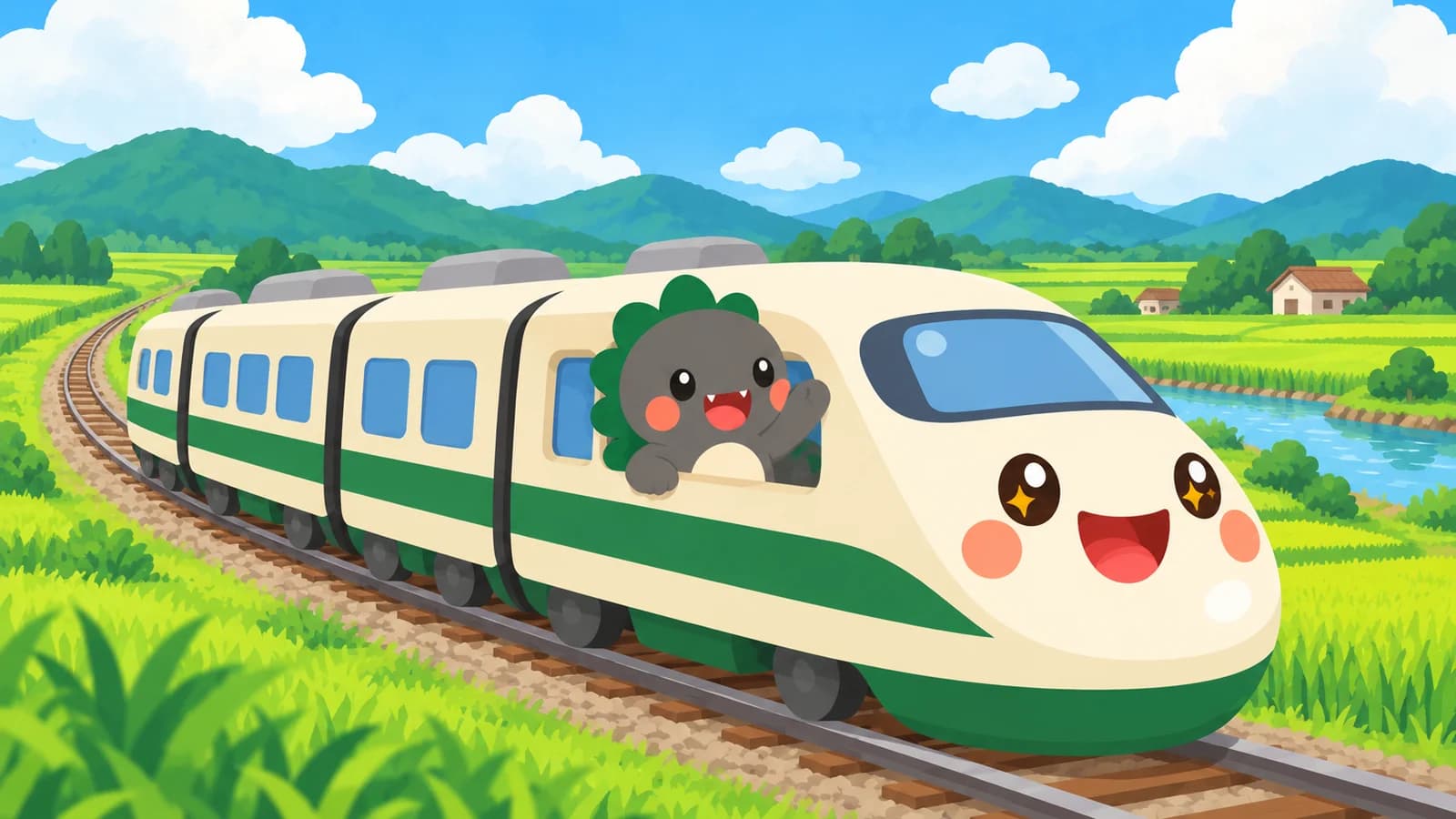
Learning a language is a long trip. Kanjira turns it into one you can see: a train ride through Japan that moves one station for every day you learn.
Most language apps count your streak. Miss one day and the number drops back to zero. Kanjira counts something else: how far you've travelled.
One stamp, one station
The app is a train ride through Japan, from Kagoshima in the south all the way up to Hokkaidō. On every day you stamp at least one word, Kanjira's train can move one station further. Stamping a word is quick: you tap it in a widget or in the app, and it lands in your collection. A finished lesson on the learning path counts too; it punches a ticket on the way.
Missed a day? Nothing breaks. The train simply waits at the platform, and every station you've reached stays yours. We wanted a journey that rewards coming back, not one that punishes a busy week.
What waits at each station
A station is more than a dot on a line. Every stop has a sign with its name, and three things to take with you:
- A word of the place. At Kagoshima-Chūō, where the journey starts, that's 火山 (kazan, volcano), because the city lies across the bay from an active one.
- A local speciality, or meibutsu. Kagoshima's is さつまあげ (satsuma-age, deep-fried fish cakes).
- An eki stamp for your travel book.
Station stamps are a real Japanese habit. Many stations keep a stamp and an ink pad near the gates, each with its own design, and travellers collect them in little books. Kanjira's travel book works the same way: every stamp shows you were there.
Why a train, and not a map with levels
Trains are how many people actually see Japan, and they suit learning surprisingly well. A train doesn't jump. It goes one station at a time, at a steady pace, and you always know which stop comes next. That's what learning a language feels like when it goes well: small, regular steps that add up to a long way.
The train also explains why the next station matters. You don't stamp a word to keep a counter alive; you stamp it because there's a town ahead with a new word, a new dish and a new stamp waiting. Hakata, for example, greets you with やたい (yatai, food stall) and a bowl of Hakata ramen.
The courses on the learning path are named after Japanese trains as well, from the local 普通 (futsū) to the fast はやぶさ (hayabusa). You start slowly and pick up speed, just like the line itself.
We keep the route a secret
You might notice that we never show the whole route or say how many stations there are. That's on purpose. Part of the fun is not knowing what comes after the next curve, and we'd rather you discover each station from the window than from a spoiler on a website.
So pack light. One word a day is enough to get the train moving.